


BIOGRAFIE
Hubert von Goisern
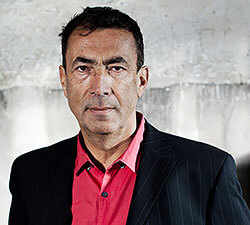 Hubert von Goisern wurde am 17. November 1952 in Bad Goisern im österreichischen Salzkammergut als Hubert Achleitner geboren. Mit 5 Jahren erklärte er seinen Eltern, er wolle Dirigent werden. Mit 12 Jahren trat er bei der örtlichen Blaskapelle ein. Dort bekam er als Leihgabe sein erstes Instrument - eine Trompete - und kostenlosen Unterricht. Mit 16 Jahren spielte er bereits die erste Trompete im Orchester. Meinungsverschiedenheiten mit dem Kapellmeister bezüglich des redundanten Repertoires und wegen Huberts damals schulterlangen Haaren führten 3 Jahre später zum Hinauswurf. Ohne die Leihtrompete griff er als nächstes zur Gitarre und brachte sich das Spielen selbst bei. Es folgten die Gründung einer Band und erste Eigenkompositionen. Taj Mahal, Alexis Korner, Jimmy Hendrix, Ravi Shankar, John McLaughlin und Miles Davis waren unter anderem Inspirationsquellen für den jungen Musiker.
1952-72
-
Anfang seiner Zwanziger wanderte Hubert nach Südafrika aus, wo er 4 Jahre lang als Chemielaborant arbeitete. Anschließend zog er nach Kanada, wo er 3 Jahre blieb und in Toronto Flamencogitarre studierte. Auf der Heimreise nach Österreich verbrachte Hubert sechs Monate bei Kopfjägern auf den Philippinen, lernte ihre Lieder und Instrumente, z.B. die Nasenflöte, zu spielen. Seinerseits lehrte er den Kalingas österreichische Volkslieder und Jodler und wurde dadurch inspiriert, einen neuen Zugang zu seiner eigenen Volksmusik zu suchen.
1972-83
-
In Wien studierte Hubert Elektroakustik und experimentelle Musik an der Wiener Musikhochschule und verdiente sich sein Geld als freier Musiker und Komponist. 1986 griff er zum ersten Mal zur diatonischen Ziehharmonika. Sein Großvater hatte sie ihm vor vielen Jahren geschenkt. Für Hubert war sie jedoch der Inbegriff des ewig Gestrigen. In einem durch einen Schnapsrausch ausgelösten Anfall von Zerstörungswut packte Hubert das Instrument und entdeckte beim Versuch, es zu zerreißen, eine neue Spielweise. Im selben Jahr lernte er den Musiker Wolfgang Staribacher kennen, mit dem er gemeinsam als die Alpinkatzen auftrat. Während eines Straßenmusikauftritts von Hubert in der Wiener Innenstadt wurde er von einem Manager der Plattenfirma CBS angesprochen, der ihm auf der Stelle einen Vertrag anbot. Wolfgang und Hubert veröffentlichten 1988 ihre erste Schallplatte: Alpine Lawine. Das Duo trennte sich 1991 und Hubert suchte eine neue Band.
1983-91
-
Seinem Herzen folgend zog Hubert nach Salzburg. Dort fand er dann auch seine neue Band: Keyboarder Stefan Engel, Schlagzeuger Wolfgang Maier und Gitarrist Reinhard Stranzinger. Mit Sängerin und Jodlerin Sabine Kapfinger, von der Hubert jodeln lernte, war die Alpinkatzen-Band dann komplett. Das Album Aufgeigen stått niederschiassen wurde 1992 veröffentlicht. Mit den Liedern: Heast as nit, Weit, weit weg und vor allem Koa Hiatamadl wurde die Aufmerksamkeit der Rundfunksender geweckt und plötzlich war Hubert mit seinen Alpinkatzen in der Hitparade und in aller Munde. 1994 wurde das Album Omunduntn veröffentlicht. Die Band tourte ausgiebig, und auch im Ausland – Paris, Texas, New York – gab es Standing Ovations und Zugaben. Am 1. November spielten Hubert von Goisern und die Alpinkatzen ihr letztes Konzert.
1991-94
-
Das letzte Konzerte im Münchner Circus Krone wurde von Dana Vavrova und Joseph Vilsmaier gefilmt und als Wia die Zeit vergeht veröffentlicht. Ein gleichnamiges Live-Doppelalbum erschien ebenfalls. Gemeinsam mit Mode-Designern entwarf Hubert einige Mode-Kollektionen. 1995 machte er sein Schauspieldebüt an der Seite von Martina Gedeck im TV-Film Hölleisengretl. Im selben Jahr komponierte er zusammen mit Norbert Schneider die Filmmusik für Joseph Vilsmaiers großen Kinofilm Schlafes Bruder.
1994-95
-
Im März 1996 präsentierte Hubert von Goisern eine Österreichtournee des Tibetischen Instituts für darstellende Künste (TIPA). Diese Begegnung weckte sein Interesse für die Situation des tibetischen Volkes und nur 2 Monate später bereiste er Tibet zusammen mit der Exil-Tibeterin Tseten Peldon Zöchbauer. Sie verbrachten dort sechs Wochen und Hubert kehrte erschüttert von der Unfreiheit der Tibeter und der Willkür der chinesischen Besatzung nach Europa zurück, mit dem Wunsch, dem Erlebten einen musikalischen Ausdruck zu verleihen. Bei einer Audienz mit Seiner Heiligkeit dem Dalai Lama bekam er den Segen und die Erlaubnis, dieses Vorhaben mit Künstlern des TIPA zusammen umzusetzen. Das Resultat war das 1998er Album Inexil. 1996 reiste Hubert einer Einladung von Schimpansenforscherin Jane Goodall folgend in den Gombe National Park in Ostafrika. Beeindruckt von der Person Jane Goodall und ihrer Arbeit produzierte er ein Jahr später die Dokumentation Von Goisern nach Gombe. Der Soundtrack des Films Gombe erschien ebenfalls 1998.
1996-98
-
Im November 2000 folgte die Veröffentlichung von Hubert von Goiserns Comeback-Album Fön. Im Jahr darauf tourte er mit neuer Band zum ersten Mal seit sieben Jahren durch den deutschsprachigen Raum. Im Frühling wurde ein zweites Album, eine Sammlung von österreichischen Volksliedern, unter dem Namen Trad veröffentlicht. Beide Werke wurden mit dem österreichischen Amadeus Musikpreis ausgezeichnet.
2000-01
-
Auf Einladung des Goethe Institut gab HvG 2002 ein gemeinsames Konzert mit dem nubischen Superstar Mohamed Mounir vor 15.000 Leute in Assiut/Ägypten. Es folgte eine dreiwöchige Tour durch Burkina Faso, Kap Verde und Senegal. Hubert und Band spielten Konzerte solo und gemeinsam mit einheimischen MusikerInnen. Das Studio-Album Iwasig wurde im September veröffentlicht. Im Winter nahm Hubert ein zweites Album mit österreichischen Volksliedern (Trad II) in einem leerstehenden Berghotel auf dem Krippenstein auf. 2003 wurden unter anderem Konzerte in Sarajewo und Kap Verde gespielt sowie eine dreiwöchige gemeinsame Tournee mit Mohamed Mounir durch Deutschland, Österreich und die Schweiz.
2002-03
-
2004 beinhaltete Huberts Live-Programm ausschließlich Volkslieder. Das Finale der Tour fand im Januar 2005 beim Festival au Désert in Mali statt. Das Doppelalbum Ausland mit einer Live-CD und der Dokumentation Warten auf Timbuktu wurden im September veröffentlicht. Während seiner Bühnenpause gestaltete Hubert eine Klanginstallation für die Dachstein-Eishöhle und komponierte die neue Vereinshymne für die Red Bull Salzburg Fußballmannschaft. 2006 schrieb HvG einen offenen Brief an FPÖ-Obmann HC Strache mit der Forderung, dass seine Musik nicht mehr bei FPÖ-Veranstaltungen gespielt werde. Im Sommer wurde das Best-of-Doppelalbum Derweil veröffentlicht.
2004-06
-
Im Sommer 2007 begann Hubert von Goiserns bis dahin größtes Projekt: die Linz Europa Tour. Mit einem zur Bühne umgebauten Frachtschiff segelte er von Linz bis zum Schwarzen Meer. Auf der Reise legte er in Häfen an, um mit lokalen Musikern Konzerte für die Leute am Ufer zu spielen. Die Doku Goisern goes East gibt Erlebnis und Eindrücke der Reise wieder. Das Studio-Album S'Nix wurde im Frühling 2008 veröffentlicht. Die zweite Etappe der Linz Europa Tour ging dann in die andere Richtung von Linz bis zur Nordsee. Goisern goes West dokumentiert die Reise und Konzerte mit Künstlern wie Xavier Naidoo und BAP. Das Live-Doppelalbum Haut und Haar wurde im Juni 2009 veröffentlicht. Das Finale der Tour fand im Linzer Hafen statt: Ein dreitägiges Festival, bei dem viele der teilnehmenden Künstler wieder zusammengebracht wurden. 2010 wurde das Buch Stromlinien - ein Logbuch veröffentlicht, Hubert von Goiserns Resümee der letzten vier Jahre und sein Debüt als Autor.
2007-10
-
Mit einer kleinen Band und unveröffentlichten Liedern im Gepäck tourte Hubert von Goisern wieder ab Frühling 2011. Auf der Tournee spielte er eine Reihe von Konzerten in kleinen österreichischen Wirtshäusern sowie ein zweitägiges Festival mit etlichen Gastmusikern in der Kaltenberg Arena. Im September wurde das Album Entwederundoder veröffentlicht, das in den österreichischen und deutschen Albumcharts ganz oben platziert war und im Januar 2012 mit Doppelplatin ausgezeichnet wurde. Die Single Brenna tuats guat war 5 Wochen an der Spitze der österreichischen Single-Charts und wurde im Januar mit Platin ausgezeichnet. Im Mai wurde HvG mit 2 Amadeus Austrian Music Awards in den Kategorien "Album des Jahres" und "Pop/Rock" ausgezeichnet. 2012 spielten HvG und Band 101 Konzerte auf der Brenna Tuats Tournee durch Österreich, Deutschland und die Schweiz. 2013 bekam Hubert von Goisern einen Ehren-Amadeus-Award für genre- und völkerverbindende Musik und Im Jahr des Drachen, das Live-Doppelalbum der Tour, wurde im Juni veröffentlicht.
2011-13
-
Nicht nur die Arbeit an einem neuen Studio-Album und eine Tour beschäftigten HvG 2014: Bei der Alpenliebe-Ausstellung, die im Juni auf dem Großglockner eröffnet wurde, befindet sich eine von Hubert gestaltete musikalische Reise per Wurlitzer durch die Alpen. Eine Auswahl dieser Musik erschien im Oktober auf Steilklänge. Im selben Monat erschien auf dem Album Filmmusik der von Hubert von Goisern komponierte Soundtrack zu Joseph Vilsmaiers großen Film Österreich: Oben und Unten. Ab April 2015 war HvG selbst auf der großen Leinwand mit dem biografischen Dokumentarfilm Brenna tuat's schon lang zu sehen. Das neue Studio-Album Federn mit seinem Country- und Bluegrass-Gefühl erschien im Mai 2015. Kurz darauf gingen HvG und die Band wieder auf Tour. 2016 wurde die Tour fortgesetzt, beginnend mit Konzerten in New York, Washington D.C. und Austin/Texas. Danach, im April 2017, erschien das Doppelalbum Federn Live 2014-2016.
2014-17
-
Im Mai 2018 wurde der Hubert von Goisern Kulturpreis gegründet, ein Förderpreis für KünstlerInnen, der mit insgesamt 15.000 Euro pro Jahr dotiert ist. Nach einer Tourpause veröffentlichte HvG im Mai 2020 seinen ersten Roman. Flüchtig erschien unter seinem bürgerlichen Namen Hubert Achleitner und wurde schnell zum Bestseller. Das neue Studioalbum, Zeiten & Zeichen, erschien am 28. August 2020 und erreichte Platz 2 in den österreichischen Charts.
2018-20
-
Im September 2021 ging die neue Musiksendung Steilklänge – Radio für Schwindelfreie von und mit dem Musiker selbst im Freien Radio Salzkammergut auf Sendung. 2022 nahmen Hubert von Goisern und seine Band das Zeiten & Zeichen Album mit auf ihre lang erwartete Tour. Im Frühling 2023 erschien Derweil 2 – eine Sammlung der besten Lieder 2007-2023 – sowie eine Aufnahme des letztjährigen Tour-Finales im Salzburger Festspielhaus: das Doppelalbum Zeiten & Zeichen Live. Ab Mai bis November 2023 waren Hubert von Goisern und seine Band zurück auf den Bühnen Europas auf der Neue Zeiten Alte Zeichen-Tour. Im Winter spielte HvG anlässlich ihres 40-jährigen Jubiläums mit der Lungau Big Band auf. Seine eigenen Lieder, arrangiert für Blech, Balg und Holz, bildeten das bunte Programm.
2021-23
-
Im Jänner trat Hubert von Goisern mit dem Chor der 1000 bei der Eröffnung des Kulturhauptstadtjahres Bad Ischl Salzkammergut auf und im Sommer leitete er eine Straßenmusik-Tour durch die Kulturhauptstadt-Region. Weitere Auftritte mit der Lungau Big Band standen ebenfalls auf dem Programm, die mit dem Live-Album Blech, Balg & Holz gekrönt wurden. Bereits im April wurde Hubert von Goisern mit dem Amadeus Austrian Music Award für sein Lebenswerk ausgezeichnet. Der goldene Preis wurde von Bundespräsident Alexander van der Bellen überreicht. 2027 geht Hubert von Goisern wieder auf Tournee!
2024-27